

Halloween print on demand punishes lateness more than any other season, because the purchase has a fixed date attached to it. A costume-adjacent shirt that arrives on the second of November has no value to the buyer, and it will be returned and reviewed accordingly. That single fact reorganises everything about this season: when listings must be published, which products are worth carrying, how late you can accept orders, and how much of the margin should be reserved for the risk of a spike. This guide works backwards from the date rather than forwards from the design.
Top 5 Best-Selling Collections in Q2 2026
Discover Printdoors’ most-loved collections, from cozy bedding and festive holiday decor to stylish men’s pajamas and eye-catching home wall decor, each crafted for easy customization and standout POD sales.| No. | Category | Description |
|---|---|---|
| 1 | Bedding | Soft, customizable bedding with unique prints, designed to enhance comfort, use quality materials, and elevate bedroom style. Know more. |
| 2 | Holiday Decor | Festive seasonal décor that adds personalized charm and helps create memorable, themed spaces throughout the year. Know more. |
| 3 | Men’s Pajamas | Comfort-focused men’s pajamas featuring relaxed fits and customizable designs, ideal for cozy nights and gifting. Know more. |
| 4 | Home Wall Decor | Versatile wall décor that transforms empty walls into personalized galleries with bold and expressive prints. Know more. |
When should Halloween print on demand listings be live to rank and convert?
Well before shoppers start buying, not before the calendar turns.
Search demand builds through September and peaks in the two to three weeks before the date, so a listing published in October competes for attention at the moment when buying intent is highest but visibility is already set.
Two clocks run in parallel. The discovery clock is about how long a listing needs to accumulate the engagement that supports visibility; the buying clock is about when demand actually converts. Publishing early lets a listing gather both. A practical schedule publishes Halloween designs six to eight weeks before the date, refreshes imagery and copy as demand builds, and promotes hardest in the two weeks before the cut-off. The counter-argument is that early traffic is low, which is true but irrelevant: the traffic in the final fortnight is the traffic that matters, and the listing has to be established by then. For a catalogue built on print-on-demand production, publishing early also removes the temptation to accept orders that production cannot deliver on time, which is the failure that damages a store’s metrics long after the season ends.
How PrintDoors POD Products Are Made? PrintDoors Factory Tour
PrintDoors is a 100% free Print On Demand (POD) fulfillment partner with zero minimum order requirements, specializing in turning your custom designs into high-quality clothing, apparel, home decor, and gifts. Operating four state-of-the-art factories, PrintDoors manages the entire production lifecycle—from cutting and printing to sublimation, sewing, and packing. With seamless automated integration for Shopify and Etsy, you can focus entirely on selling while they handle the printing, packaging, and fast shipping directly to your global customers. Register today to effortlessly scale your e-commerce business with the magic of personalized printing!
Which products sell in this season and which do not?
Wearable, low-commitment items convert; fit-critical items do not.
Halloween demand favours products that are bought as a gesture or an accessory rather than as a costume that has to fit precisely on a fixed date.
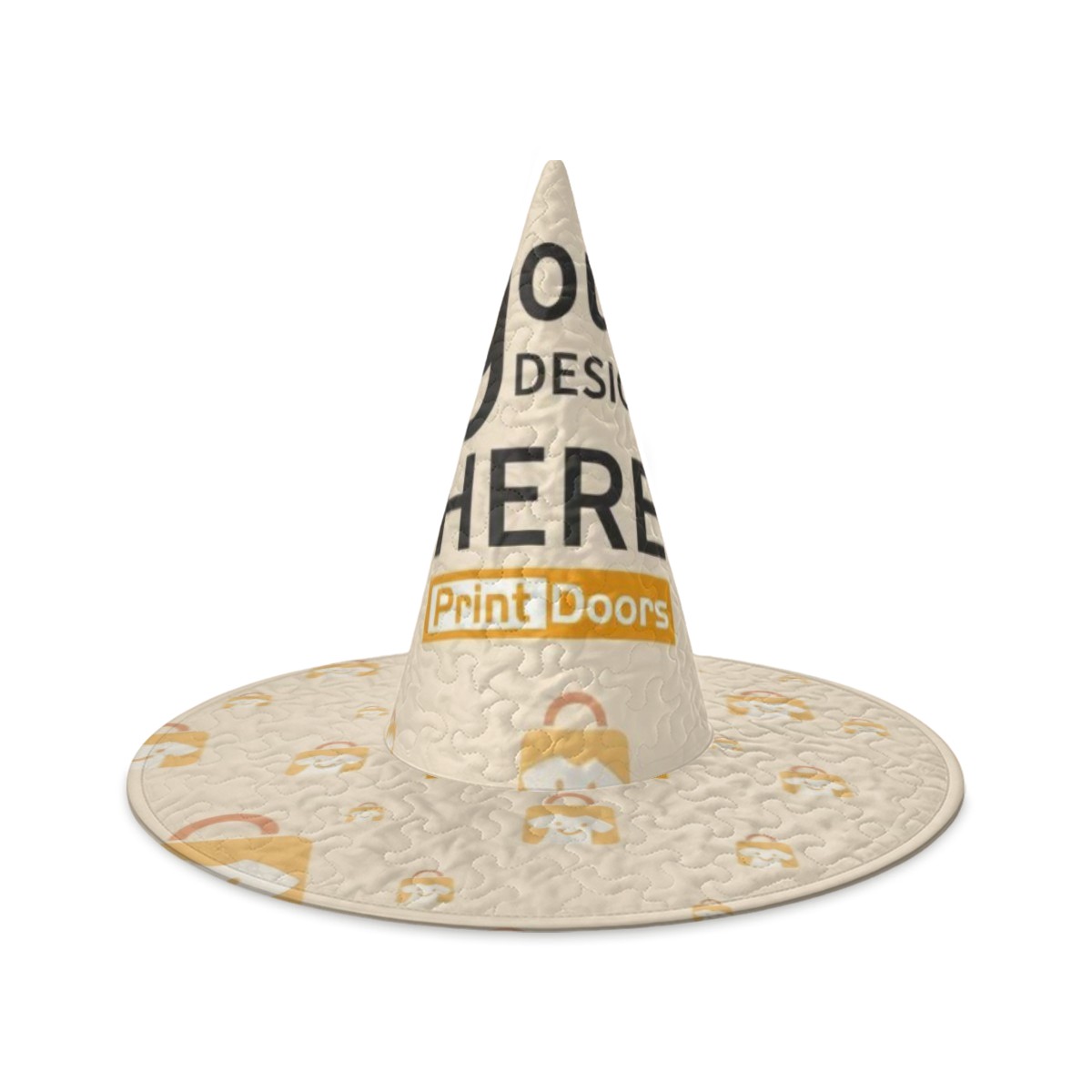
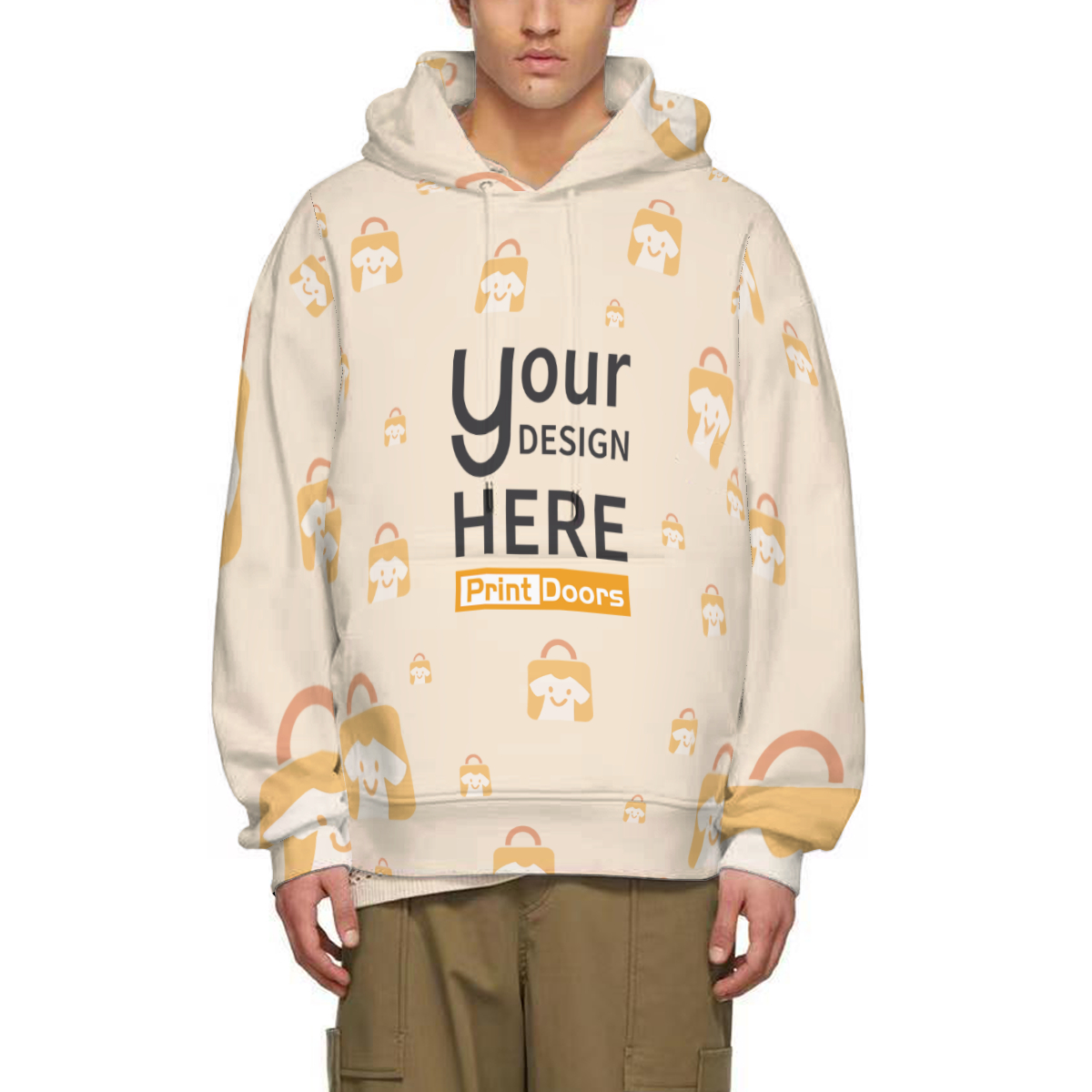
The strongest categories are printed apparel for adults and children, where a T-shirt or hoodie carries the design and the buyer already knows their size; home and decor items such as printed cushions, blankets, door decor, flags, table linens and quilted or embroidered seasonal shapes, which are bought early and often for a house rather than a person; pet products, which are the lowest-risk novelty purchase in the season; and small personalised items such as ornaments, keychains and accessories, which suit gifting and party favours. Products that disappoint are those where fit or appearance must be perfect on a specific day: costume-style garments with tight sizing, custom footwear in a novelty style, and anything with a long production route. The pattern is straightforward — sell what a customer can be confident about buying without trying, because there is no time for an exchange before the date.
How do you keep designs clear of trademark problems?
Stay with generic seasonal imagery rather than anything recognisable.
Costumes, films, television and character merchandise are protected by copyright and trademark, so a design that echoes a recognisable character or a brand name creates removal risk in the busiest selling window.
The safe territory in this season is broad: pumpkins, bats, spiders, ghosts, black cats, autumn foliage, moons, potions, skeletons and generic witch imagery are all traditional motifs without an owner. The risk appears in the specifics — a character silhouette that is recognisable, a phrase associated with a named franchise, a logo, or a phrase that is a registered mark. Three controls reduce exposure. Avoid text that references a brand or a film by name, even obliquely. Avoid reproducing a distinctive costume design that a buyer would identify as belonging to a specific property. And check phrases that look generic but may be registered, using public trademark databases such as the WIPO Global Brand Database and the guidance published by the USPTO before building a range around a slogan. A removal notice in the first week of October costs the whole season’s design work.
How do production and shipping cut-off dates work before October?
Work backwards from the date the customer must receive the item, not from the date they order.
Each leg of the journey consumes time — production, dispatch, transit and the buyer’s own decision window — so the last safe order date is earlier than sellers usually assume.
Build the schedule as a subtraction. Start with the date the item must arrive, typically two to four days before the event so the customer has time to receive it. Subtract the transit window for the destination, using the carrier’s published range rather than a typical figure. Subtract the dispatch window that applies to the product. Subtract a buffer for a peak-period queue. The result is the last order date, and it should be published as a deadline on the collection page rather than left implicit. Production commitments make this easier to state precisely: PrintDoors publishes four-hour production with twenty-four to seventy-two hour dispatch across more than 140 products, with a stated compensation rule when the window is missed, while other products follow standard scheduling. Carrier transit references such as USPS business shipping and FedEx rate charts provide the second number in the calculation.
How do you manage order spikes without missing dispatch promises?
Spikes are a queue problem, and queues are managed with published limits rather than hope.
A seasonal campaign can multiply daily order intake several times over, which tests the intake window, the exception path and the carrier pickup schedule at the same moment.
Three controls hold a dispatch promise through a spike. Publish a conservative processing time for the peak rather than the year-round figure, and reduce it later if the data supports it, because a promise extended in advance costs nothing and a missed one costs the season. Cap promotional intensity rather than capacity: a discount that doubles intake is manageable, one that multiplies it by five is a delivery failure waiting to happen. And confirm the dispatch window that applies to each product under load, since fast-fulfilment products are defined by a production rule rather than by a seasonal commitment, which makes them the safer choice for late orders. Keep the exception path visible in the same period: an order that cannot be produced should be flagged to the seller in hours so the customer can be told before the promised date rather than after it.
How do you price seasonal items without destroying margin?
Seasonal pricing has two failure modes: pricing as if the product were year-round, and discounting to compete in the final week.
A short selling window means the whole campaign must recover its design, photography and advertising cost inside a few weeks, so a thin margin per order rarely survives.
Build the price from the seasonal cost structure rather than the standard one. Include the design and mockup work, since it cannot be amortised across twelve months. Include the higher advertising cost of a competitive window, because auction prices rise when every seller is bidding on the same terms. Include a packaging and shipping assumption for the heavy end of the range, and include a refund allowance that reflects the higher return rate of date-driven purchases. Then set a floor below which you will not discount in the final week, and hold it. The alternative to discounting is to shift the offer: a bundle of two items, or a personalisation upgrade, preserves price while increasing order value, and both are easy to produce on demand because nothing is tooled. PrintDoors applies no setup or monthly fee and carries no minimum order quantity, so a seasonal design that does not sell costs design time rather than stock.
Photography and listing timing by platform
Seasonal imagery has a short life, and the images that convert in October are not the ones that work in August. Two sets of images are worth producing. The early set positions the product as part of a season — styled in a room, worn casually, shot in daylight — and suits the browsing behaviour of early shoppers. The late set emphasises gifting, delivery and personalisation, which suits buyers who are buying to a deadline. Generate mockups from the real product template so placement matches production, and include a scale reference, because novelty items are frequently returned when they arrive smaller than expected. Listing timing follows the same logic: publish early, refresh imagery as intent changes, and add the delivery deadline to the imagery and the title as the cut-off approaches so the promise is impossible to miss. PrintDoors provides an online design maker with a model generator and supports up to thirty custom colours per design element, which lets a full-colour seasonal range be previewed before a sample is ordered.
What happens to returns and unsold designs after the season?
Post-season handling differs sharply between stock and print-on-demand, and the difference is the main advantage of the model. Because nothing is produced until it is ordered, unsold designs leave no inventory behind; the only carrying cost is the artwork and the listing. What does persist is the return tail: date-driven purchases produce a wave of returns immediately after the event, concentrated on items that arrived late or did not match the buyer’s expectation of scale. Two practices reduce the tail. State the deadline clearly so a late order is the customer’s informed choice, and include scale references so a novelty item is not a surprise. Then retire the seasonal listings deliberately rather than leaving them to decay, and archive the artwork for reuse — not for re-listing unchanged, but as a base for the next occasion.
Reusing designs across autumn occasions
One design system can serve several autumn occasions if the artwork is built in layers. Separate the seasonal element from the message and the background, and a single base pattern can be reissued with a different message for harvest events, bonfire occasions, day-of-the-dead themes and Thanksgiving, without creating new artwork from scratch. That layering also reduces the design cost per selling window, which is the largest fixed cost in a seasonal campaign. Two practical notes: keep the colour palette broad enough to work in both warm autumn tones and monochrome, since the same motif reads differently in each; and re-cut the design for each product template rather than resizing one file, because a composition built for a wall print rarely works on a cap panel. PrintDoors supports CSV design import for catalogue work at volume, which is what makes a layered seasonal system practical across a product range rather than a single item.
A season preparation checklist by week
Work the list backwards from the event date.
| Timing | What to complete |
|---|---|
| Eight weeks out | Finalise the design system and clear trademark risk; order samples of each product in the range |
| Seven weeks out | Confirm production routes, dispatch windows and the product mix; photograph samples |
| Six weeks out | Publish listings and the collection page; begin light promotion to build engagement |
| Four weeks out | Increase promotion; refresh imagery toward gifting and delivery messaging |
| Three weeks out | Publish the last safe order date; verify carrier transit for each main destination |
| Two weeks out | Peak promotion; monitor dispatch performance daily against the published window |
| Final week | Stop promoting late-delivery destinations; hold the price floor; watch the exception queue |
| After the event | Handle the return tail, retire listings, archive layered artwork for the next occasion |
Postal and courier networks publish their own seasonal deadlines, and the standards that govern international postal exchange are documented by the Universal Postal Union, which is useful context when a cross-border destination needs a defensible cut-off date.
Conclusion
The Halloween season is won in September and lost in the first week of October. Publish early enough for a listing to be established, choose products a buyer can order without fitting risk, clear trademark exposure before the artwork is finished, and publish a last order date built backwards from the event rather than forwards from the order. Keep a price floor for the final week, and keep the design system layered so the same work carries into the next autumn occasion. Print-on-demand production removes the inventory risk from the plan; the scheduling discipline is what removes the rest.
FAQ
How early should Halloween listings go live?
Six to eight weeks before the event. Early traffic is low, but the objective at that stage is to establish the listing so it competes in the final two to three weeks when buying intent peaks. Publishing late means competing for visibility at the moment demand is highest.
Which products return the least in a Halloween campaign?
Those a customer can order without fitting risk: printed T-shirts and hoodies in sizes the buyer already knows, home and decor textiles bought for a house rather than a person, pet products, and small personalised accessories. Fit-critical costume-style garments drive most seasonal returns.
Can I use a character or film reference in a seasonal design?
No. Costumes, films and character merchandise are protected by copyright and trademark, and a recognisable echo of a character, franchise phrase or logo creates removal risk in the busiest selling window. Traditional motifs such as pumpkins, bats, ghosts and witches have no owner.
What is the last safe order date for a seasonal item?
Work backwards: the arrival date, minus the carrier transit range, minus the product’s dispatch window, minus a peak-period buffer. Publish the result as a deadline on the collection page rather than leaving it implicit, and stop promoting late-delivery destinations in the final week.
Do I need to hold stock to sell a seasonal range?
No, and the print-on-demand model removes the largest seasonal risk. PrintDoors states no minimum order quantity and no setup or monthly fee, so a design that does not sell costs design time rather than dead inventory. The remaining exposure is the return tail after the event.
Start the range eight weeks out
Open a free PrintDoors account to sample the seasonal products you plan to list, confirm the dispatch window for each, and publish a last order date you can defend. Start at sign-up, review the seasonal collection, or browse products.