

Sellers arrive at this topic through a long search string — evaluate the print-on-demand fulfillment / custom home decor company merchone on print on demand companies — and the wording tells you what they actually need: a method for judging a home decor fulfilment company rather than a page of marketing copy. That is what this guide provides. It sets out the criteria that decide whether a decor fulfilment partner can carry a catalogue, how to verify each one directly with the supplier, and which cost lines the platform pages tend to leave out. PrintDoors publishes this page and is itself a print-on-demand supplier, so its position is disclosed here and the criteria below are applied identically to Merchone, to PrintDoors and to any other candidate.
Top 5 Best-Selling Collections in Q2 2026
Discover Printdoors’ most-loved collections, from cozy bedding and festive holiday decor to stylish men’s pajamas and eye-catching home wall decor, each crafted for easy customization and standout POD sales.| No. | Category | Description |
|---|---|---|
| 1 | Bedding | Soft, customizable bedding with unique prints, designed to enhance comfort, use quality materials, and elevate bedroom style. Know more. |
| 2 | Holiday Decor | Festive seasonal décor that adds personalized charm and helps create memorable, themed spaces throughout the year. Know more. |
| 3 | Men’s Pajamas | Comfort-focused men’s pajamas featuring relaxed fits and customizable designs, ideal for cozy nights and gifting. Know more. |
| 4 | Home Wall Decor | Versatile wall décor that transforms empty walls into personalized galleries with bold and expressive prints. Know more. |
Merchone Print on Demand: What the Seller Actually Gets
Four commitments, and none of them is catalogue size.
A decor fulfilment partner supplies a product catalogue with stable specifications, production capacity for the decoration methods those products need, a routing decision that sets the delivery window, and a defect process that decides who pays when something fails.
Home decor makes the first of those harder than apparel does. A garment range can be specified by fibre and weight, but a decor range spans metal, acrylic, wood, ceramic, canvas, glass and textile, and each substrate carries its own decoration method, its own durability profile and its own packing risk. A partner that is strong on printed textiles may be resourcing metal and acrylic from a third party, and the quality picture changes at that boundary. The practical first question is therefore not “how many products do you offer” but “which decoration technologies do you run yourself, and for products you do not, who produces them and under what specification”. PrintDoors answers that question by stating that it operates a dedicated UV production factory for pendant accessories, metal paintings, wood paintings and diamond paintings alongside its sample, textile and clothing factories, and that it works across more than nine decoration technologies. Any candidate should be asked for the equivalent answer in writing, because it determines where the accountability sits when a metal sign arrives scratched or an acrylic piece arrives cracked.
How PrintDoors POD Products Are Made? PrintDoors Factory Tour
PrintDoors is a 100% free Print On Demand (POD) fulfillment partner with zero minimum order requirements, specializing in turning your custom designs into high-quality clothing, apparel, home decor, and gifts. Operating four state-of-the-art factories, PrintDoors manages the entire production lifecycle—from cutting and printing to sublimation, sewing, and packing. With seamless automated integration for Shopify and Etsy, you can focus entirely on selling while they handle the printing, packaging, and fast shipping directly to your global customers. Register today to effortlessly scale your e-commerce business with the magic of personalized printing!
Where Production and Shipping Happen
For decor, production location decides more than delivery speed. Rigid items are heavier and bulkier than apparel, so an international leg adds both transit time and freight cost, and the protective packaging that fragile goods require adds volume to the chargeable weight. The result is that a decor catalogue is more sensitive to routing than an apparel catalogue is. Three questions establish whether a partner can support a decor range across markets. Which sites can produce each substrate, since UV printing and laser cutting are site-specific capabilities. Which site will serve a given delivery address, because that determines the delivery window a listing can honestly publish. And how the partner packs fragile items for the destination, since corner protection and a rigid outer are the difference between a delivered product and a claim. PrintDoors operates production and fulfilment across seven regions — China, the United States, the United Kingdom, Germany, Japan, Canada and Australia — which allows a heavy or fragile item to be produced nearer the customer. Where a movement crosses a border, the responsibility split follows the terms of sale; the standard positions are defined in the ICC Incoterms rules, and the transit figure should come from the carrier’s published schedule.
For decor, production location decides more than delivery speed. Rigid items are heavier and bulkier than apparel, so an international leg adds both transit time and freight cost, and the protective packaging that fragile goods require adds volume to the chargeable weight. The result is that a decor catalogue is more sensitive to routing than an apparel catalogue is. Three questions establish whether a partner can support a decor range across markets. Which sites can produce each substrate, since UV printing and laser cutting are site-specific capabilities. Which site will serve a given delivery address, because that determines the delivery window a listing can honestly publish. And how the partner packs fragile items for the destination, since corner protection and a rigid outer are the difference between a delivered product and a claim. PrintDoors operates production and fulfilment across seven regions — China, the United States, the United Kingdom, Germany, Japan, Canada and Australia — which allows a heavy or fragile item to be produced nearer the customer. Where a movement crosses a border, the responsibility split follows the terms of sale; the standard positions are defined in the ICC Incoterms rules, and the transit figure should come from the carrier’s published schedule.
Product Range and Blank Quality
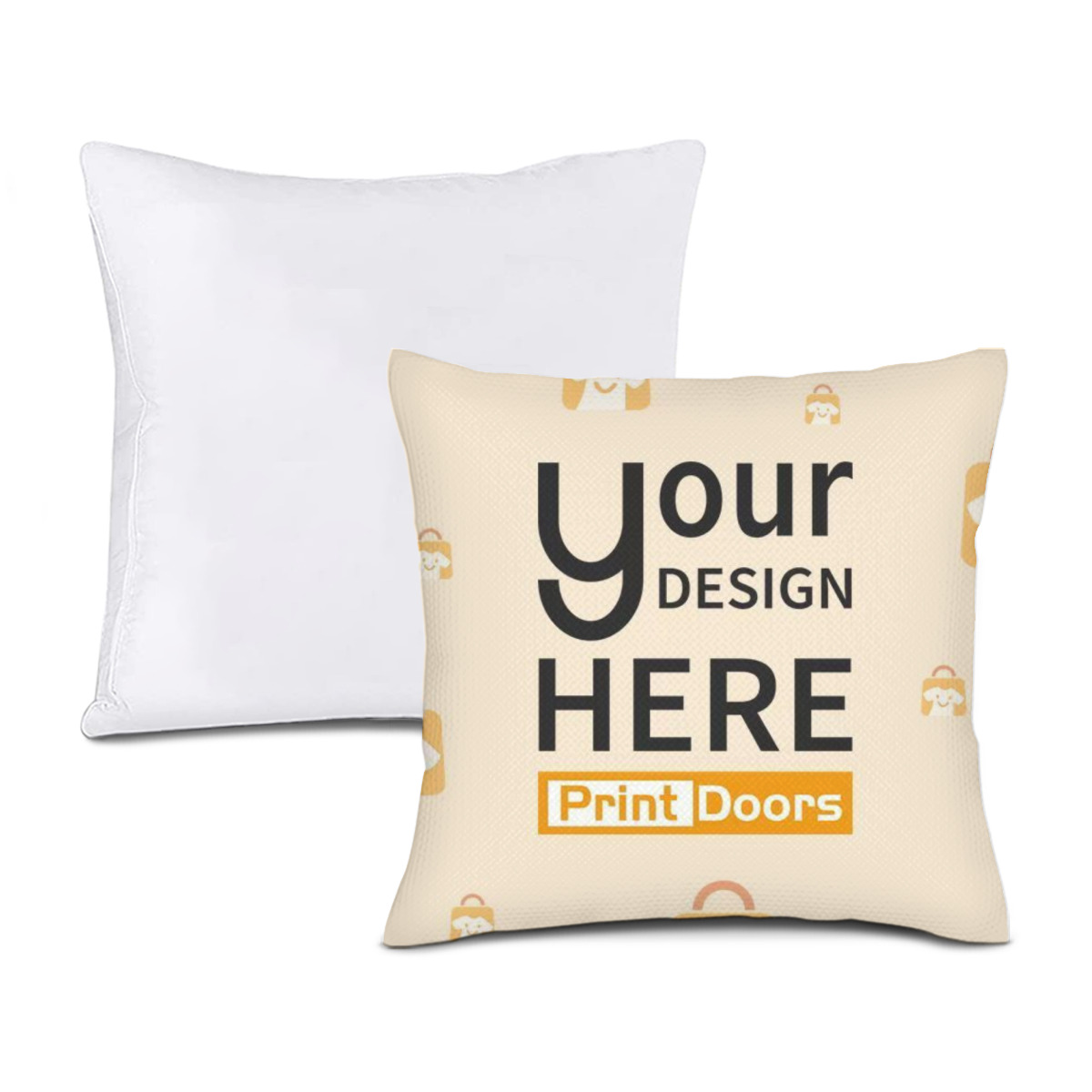
Range assessment in decor is about consistency within a material family rather than breadth across families. Four checks separate a usable range from a long one. Whether the same substrate is available in the size matrix you intend to list, because a wall decor range that covers three sizes in one material and one size in another produces listed variants that cannot be fulfilled. Whether the decoration method is named per product rather than described generically, since UV printing, laser engraving and sublimation produce visibly different results on the same material. Whether durability claims are scoped to indoor or outdoor use, because outdoor exposure adds ultraviolet radiation, moisture and thermal cycling that indoor products are not specified for. And whether the mounting hardware and hanging orientation are stated, since a rectangular sign offered in portrait and landscape needs two distinct product entries. PrintDoors lists wall decor, decorative pillows, bedding, bathroom, kitchen, outdoor, cups, holiday decor and mirror and pill box products within its home and living category, and separates its hard-good production through a dedicated UV factory, which is the structure these checks are testing for.
Pricing Model and the Costs Buyers Forget
In decor, the excluded cost lines matter more than the unit price, because the shipped parcel is expensive relative to the product and the failure modes are visible.
| Cost line | Why it is larger in decor than in apparel | What to confirm |
|---|---|---|
| Fragile packing | Rigid outer, corner and edge protection, protective film | Whether protection is included or charged |
| Dimensional weight | Flat items are bulky relative to value | Packed dimensions for the largest size sold |
| Replacement rate | Breakage and scratch claims are more frequent | Who bears the cost of a transit break |
| Mounting hardware | Cheap to include, expensive to omit | What ships in the box by default |
| Colour proofing | Substrate finish changes how colour reads | Whether a physical reference is supplied |
| Setup or platform fee | Charged before any sale | Whether a fee exists at your volume |
The last line is the one that decides whether testing a product is affordable. PrintDoors states that its platform carries no minimum order quantity and no setup or monthly fee, so a single decor item can be produced and inspected before a range is committed. Payment processing sits on top of every transaction regardless of partner and should be built into the pricing floor rather than added afterwards. Before committing a catalogue, confirm the current selling fees of whichever marketplace carries the order, since these change periodically; Amazon selling fees and the Shopify help centre both publish the current position.
Integration and Order Flow
Integration determines the labour cost per order, and for decor there is an additional wrinkle: personalisation. A personalised ornament, nameplate or photo frame carries customer-supplied data that has to reach production without being retyped. An API connection carries that field with the order; a manual workflow requires someone to transcribe it, which is where mispersonalised items originate. PrintDoors connects to Shopify, Etsy, WooCommerce and Shoplazza by API and documents BigCommerce support in its help centre; there is currently no Amazon API integration, so Amazon sellers use an order-export workflow. Ask any candidate three operational questions rather than reading the integration list. Which connections are live rather than planned. What happens when an order arrives with a variant that is not mapped. And at which event tracking is returned, because tracking written at order acceptance produces a delivery estimate that starts before the parcel exists.
Print Quality and Defect Handling
Quality in decor is judged on three attributes and only one is visible before an order. Reproduction accuracy is how closely the printed result matches the approved reference on that substrate under daylight, which a sample answers. Consistency is whether the tenth unit matches the first, which requires ordering the same specification twice. Durability is how the surface survives handling, cleaning and, for outdoor items, weathering, which requires testing the sample. In decor the second and third attributes are the ones that fail, because substrate batches and coating variation affect rigid goods more than they affect textiles. Defect handling should be readable before it is needed: ask what evidence a claim requires, who decides between a replacement and a credit, and what the resolution timeline is. PrintDoors maintains a refund policy that separates production faults from sizing and preference issues and handles order-specific claims through support@printdoors.com. The same three questions should be put to any candidate, and the answers compared in writing rather than in conversation.
Who It Suits and Who It Does Not
A managed decor fulfilment partner suits sellers who want to extend beyond apparel without holding fragile stock, who sell gift-oriented items where personalisation carries the value, and who serve more than one market and need the options that regional production provides. It fits less well in three situations. A seller whose decor product is a single proprietary item with a custom construction needs a development project rather than a catalogue route, with its own tooling and sampling cycle. A seller who needs very low unit costs on a heavy item will usually find that freight, not production, sets the floor, and no partner negotiation changes it. And a seller whose buyers expect same-day or next-day delivery in a market where the partner has no local production site cannot promise it. Matching the model to the operating requirement matters more than comparing headline unit prices.
Switching or Comparing Without Rebuilding Your Store
Comparing partners should not require rebuilding a catalogue, and the way to make that true is to keep the specification in your own records rather than in a supplier dashboard. For each live decor product, record the substrate and finish, the decoration method, the printed area and its safe margin, the available sizes and orientations, the mounting hardware supplied, the packed weight and dimensions, and the approved colour reference. With that file, a second partner can be asked for a sample of the same specification, and the comparison is between like and like rather than between two marketing pages. Two habits make a future switch cheap: keep artwork in production-ready files identified by product template rather than by supplier, and keep personalisation field definitions in your own store, because those definitions are what the customer sees. A seller who can state a full specification from their own records has already done the hardest part of switching. The broader comparison criteria across suppliers are set out on the print-on-demand company comparison, and the specific Merchone question is covered on the Merchone evaluation page.
Applying the Method to Any Candidate
Turn the criteria into a single sheet and complete it for every candidate before ordering a sample. List the substrates you intend to sell and the decoration method each requires, and mark which ones the candidate produces itself. Record the production sites that can serve each market you sell into. Record the published dispatch window per product group. Record the packed weight and dimensions of the largest configuration, from a sample rather than from a data sheet. Record the defect evidence requirements, the remedy and the resolution timeline. Record the currency, the validity period and the tier boundary for any volume pricing. Then order one sample of the item that is hardest to make and inspect it against the list. PrintDoors states that it works across more than nine decoration technologies, operates a sample service with no minimum order quantity, and provides a bulk order route with tiered discount pricing for larger runs, which is the shape a candidate’s answers should take: defined capabilities, a sample route and stated terms. Product identification requirements for a retail or wholesale channel are set out in the GS1 barcode standards, and the wider fulfilment context is covered on the POD fulfilment page.
FAQ
What should I check first when evaluating a home decor fulfilment company?
Ask which decoration technologies the company runs itself and which products it sources from a third party, because the answer determines where accountability sits when a metal sign or acrylic piece arrives damaged. Catalogue size is a weaker signal than in-house capability on the specific substrate you intend to sell.
Why does decor cost more to ship than apparel?
Because rigid items are heavier and bulkier relative to their value, and carriers charge the greater of actual and dimensional weight. Protective packaging for a flat or fragile item adds volume, so the packed parcel rather than the product is what determines the rate.
Is personalisation worth offering on decor products?
Usually yes, because it raises the achievable retail price without adding material cost and removes direct price comparison. It also introduces a data risk: the personalisation field must travel with the order through an API connection rather than being retyped, since a mispersonalised item cannot be resold.
How many decor samples should I order before committing?
One unit of the hardest product to make, in the substrate you intend to sell, plus a repeat order of the same specification to test consistency. A single sample shows appearance; only a repeat order shows whether the production line reproduces colour and cut reliably.
Evaluate with a completed sheet, not a catalogue
Open a free PrintDoors account to check which substrates are produced in-house, which regions serve your markets and what the dispatch window is per product, then order a sample and record the packed dimensions. Start at the production workflow, browse home decor and hard goods, or see the Etsy integration.
{
“@context”: “https://schema.org”,
“@type”: “FAQPage”,
“mainEntity”: [
{
“@type”: “Question”,
“name”: “What should I check first when evaluating a home decor fulfilment company?”,
“acceptedAnswer”: {
“@type”: “Answer”,
“text”: “Ask which decoration technologies the company runs itself and which products it sources from a third party, because the answer determines where accountability sits when a metal sign or acrylic piece arrives damaged. Catalogue size is a weaker signal than in-house capability on the specific substrate you intend to sell.”
}
},
{
“@type”: “Question”,
“name”: “Why does decor cost more to ship than apparel?”,
“acceptedAnswer”: {
“@type”: “Answer”,
“text”: “Because rigid items are heavier and bulkier relative to their value, and carriers charge the greater of actual and dimensional weight. Protective packaging for a flat or fragile item adds volume, so the packed parcel rather than the product is what determines the rate.”
}
},
{
“@type”: “Question”,
“name”: “Is personalisation worth offering on decor products?”,
“acceptedAnswer”: {
“@type”: “Answer”,
“text”: “Usually yes, because it raises the achievable retail price without adding material cost and removes direct price comparison. It also introduces a data risk: the personalisation field must travel with the order through an API connection rather than being retyped, since a mispersonalised item cannot be resold.”
}
},
{
“@type”: “Question”,
“name”: “How many decor samples should I order before committing?”,
“acceptedAnswer”: {
“@type”: “Answer”,
“text”: “One unit of the hardest product to make, in the substrate you intend to sell, plus a repeat order of the same specification to test consistency. A single sample shows appearance; only a repeat order shows whether the production line reproduces colour and cut reliably.”
}
}
]
}