

Print on demand pajamas and loungewear are unusual in apparel because a full-print design is the norm rather than an exception, which makes sleepwear unusually well suited to on-demand production. It is also a category where returns concentrate: fit is hard to judge from a mockup, fabric behaviour differs sharply between styles, and children’s sleepwear carries regulatory obligations that do not apply to a T-shirt. Sellers who add a sleepwear line successfully tend to treat it as a technical product rather than a design product. This guide covers what can be printed, on what, and how to present it so it sells without generating returns.
Top 5 Best-Selling Collections in Q2 2026
Discover Printdoors’ most-loved collections, from cozy bedding and festive holiday decor to stylish men’s pajamas and eye-catching home wall decor, each crafted for easy customization and standout POD sales.| No. | Category | Description |
|---|---|---|
| 1 | Bedding | Soft, customizable bedding with unique prints, designed to enhance comfort, use quality materials, and elevate bedroom style. Know more. |
| 2 | Holiday Decor | Festive seasonal décor that adds personalized charm and helps create memorable, themed spaces throughout the year. Know more. |
| 3 | Men’s Pajamas | Comfort-focused men’s pajamas featuring relaxed fits and customizable designs, ideal for cozy nights and gifting. Know more. |
| 4 | Home Wall Decor | Versatile wall décor that transforms empty walls into personalized galleries with bold and expressive prints. Know more. |
Which print on demand pajamas and loungewear styles are available?
The range covers tops, bottoms and complete sets.
All-over print routes allow trousers, shorts, tops, full sets and robes to be decorated across the whole garment, while panel-printed styles use a defined front or back area.
The styles available in an on-demand catalogue typically include adult pyjama trousers in long and short lengths, matching tops, two-piece short-sleeve and long-sleeve sets, flannel and imitation-cotton house trousers, women’s robe styles, children’s pyjama trousers and children’s sets, and jogger-style loungewear that doubles as sleepwear. Because sleepwear sits next to casual loungewear in a catalogue, it is common to carry a hoodie or blanket hoodie in the same design family, which is why a custom hoodie often appears alongside a pyjama line rather than in a separate collection. The commercial point is that sleepwear styling is seasonal and occasion-driven, not size-driven: matching family sets, holiday sets and gifting sets all sell on the pattern rather than on the cut, which is exactly what all-over print produces well.
How PrintDoors POD Products Are Made? PrintDoors Factory Tour
PrintDoors is a 100% free Print On Demand (POD) fulfillment partner with zero minimum order requirements, specializing in turning your custom designs into high-quality clothing, apparel, home decor, and gifts. Operating four state-of-the-art factories, PrintDoors manages the entire production lifecycle—from cutting and printing to sublimation, sewing, and packing. With seamless automated integration for Shopify and Etsy, you can focus entirely on selling while they handle the printing, packaging, and fast shipping directly to your global customers. Register today to effortlessly scale your e-commerce business with the magic of personalized printing!
Fabric options and what each means for print quality
Fabric choice determines how the print reads, not just how the garment feels. Flannel brings a brushed, warm handle and a matte surface that softens fine detail but holds bold patterns well. Imitation cotton in a polyester base gives a smoother, cooler surface that reproduces small motifs more crisply. Polyester flannel and plush variants take sublimation and all-over decoration most durably because the dye bonds with the fibre. Heavier fleece-backed fabrics give loungewear its weight but can blur very fine line work. Silk-substitute and satin-style fabrics produce a high sheen that makes colour appear more saturated and can also show print inconsistency more readily. Where a material-level certification is relevant to the buyer, it applies only to the specific product line and production site named on the certificate, so request documentation for the exact fabric used rather than accepting a general brand certificate. Schemes such as OEKO-TEX Standard 100 are defined by scope, and independent laboratories such as Intertek can test a specific claim against a named standard.
Design placement rules for pants, tops and sets
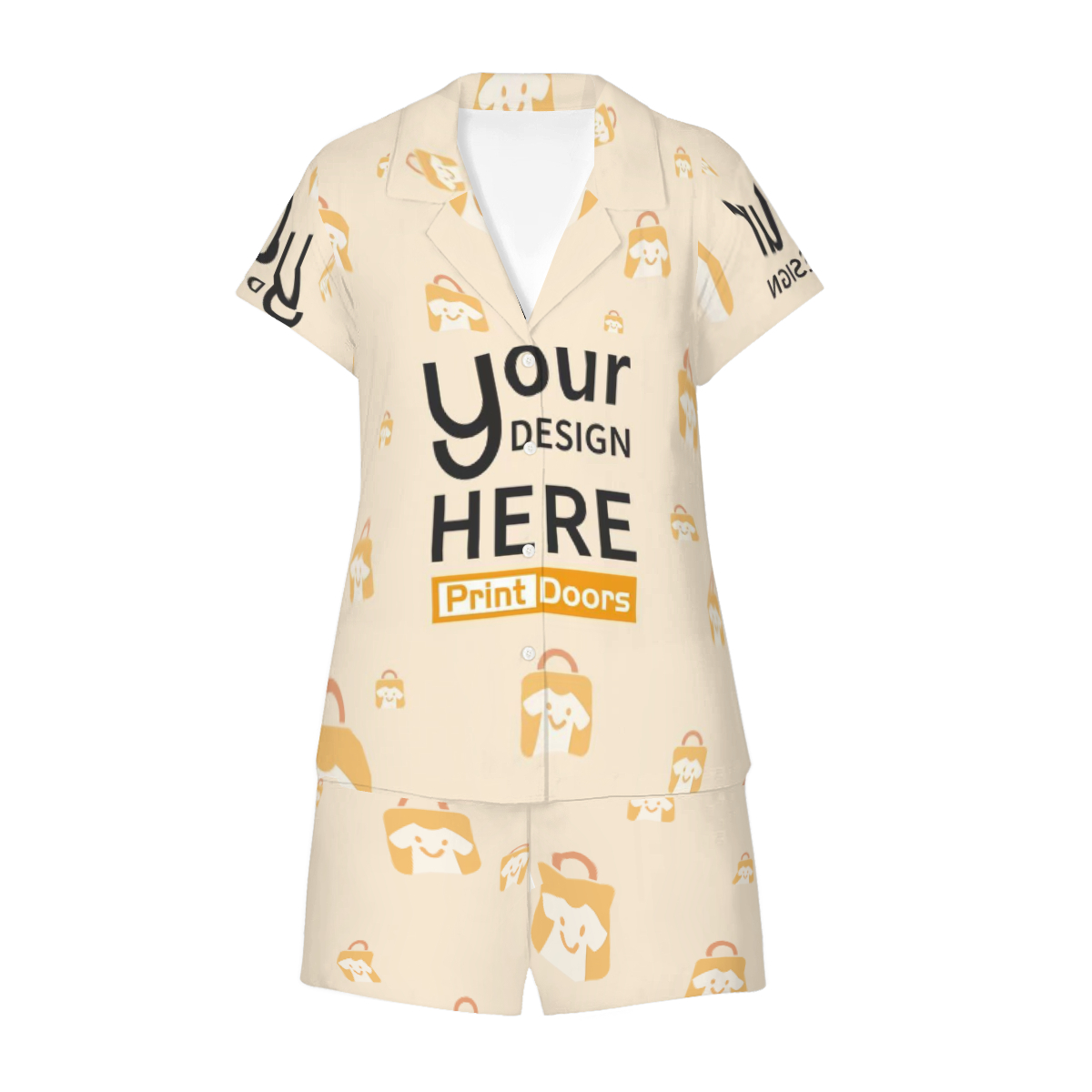
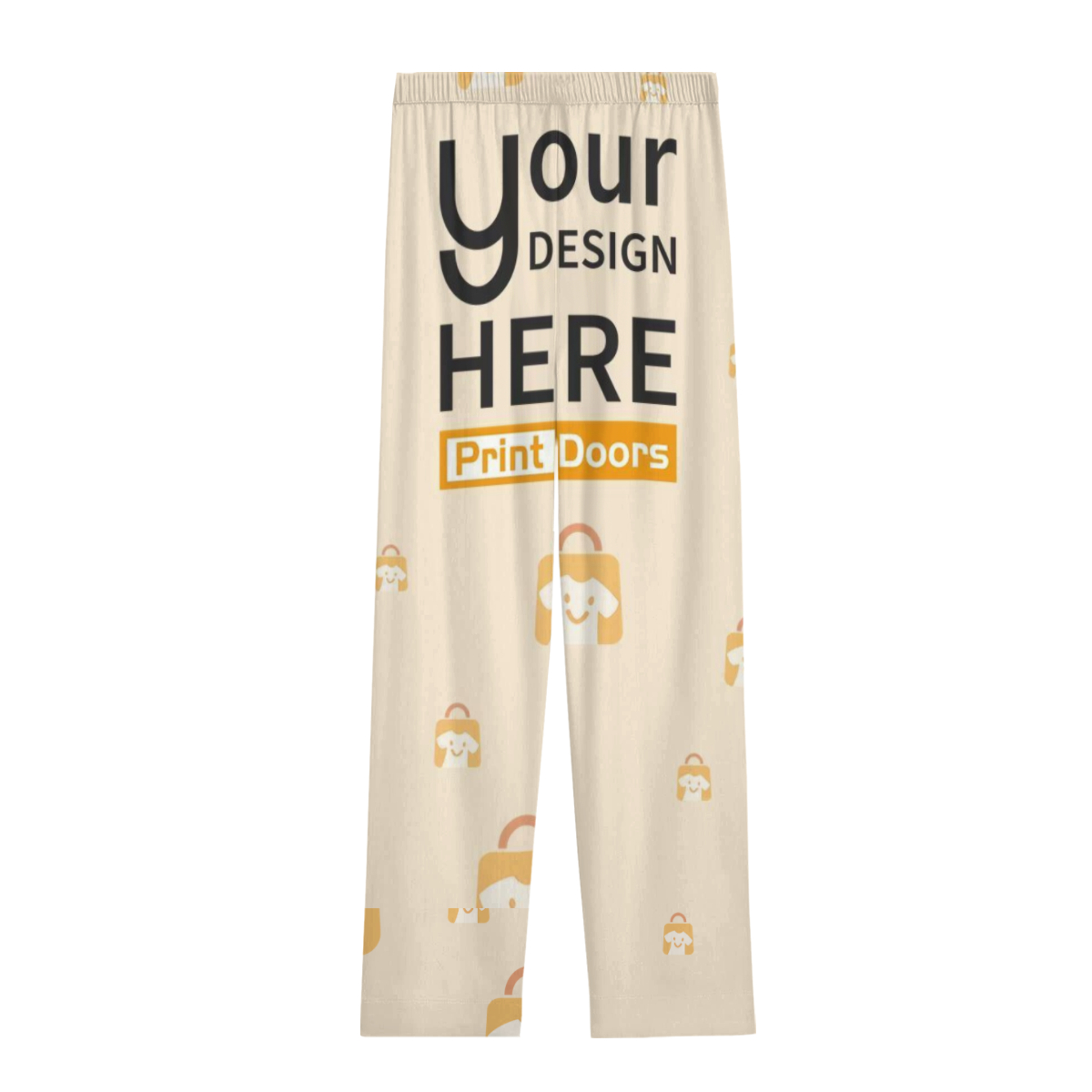
Placement rules in sleepwear are driven by the garment’s construction rather than by print area limits. Trousers have no natural focal point, so a pattern that reads well when repeated across a full length will look deliberate, while a single centred motif placed on a thigh looks arbitrary. Tops do have a focal point, so a design that combines a full-bleed pattern with a defined chest element reads as designed rather than tiled. Sets create a third requirement: continuity across two garments. Where the top and trousers are cut from the same printed web, the pattern can be aligned at the waistband; where they are cut separately, the pattern should be non-directional so the two pieces do not appear mismatched. Keep critical elements away from the waistband seam and the inside leg, and check the design at the smallest and largest size in the run, because a pattern that works on a medium can look sparse on an extended size.
Sizing, fit and how to present measurements
Sizing is the largest single source of return cost in sleepwear. Fit expectations are personal, sleepwear is often bought without trying, and a size chart copied from another category will produce complaints. Three practices reduce the risk. Publish flat garment measurements as well as a size range, because a buyer comparing a favourite pair at home needs a tape measure, not a letter. State the fabric’s stretch behaviour, since a brushed flannel and an elasticated imitation cotton loosen differently in wear and after washing. And photograph the garment on a body as well as flat, because the drape of a sleepwear set is part of what the buyer is deciding. Care labelling and fibre content disclosure requirements are regulated in the United States under the Textile Fiber Products Identification Act and associated rules, and the information on the label should match the listing exactly.
Print methods used on sleepwear and their wash durability
Durability is the reason sleepwear favours one method over the others.
Sublimation and all-over printing on polyester-based sleepwear bond colour into the fibre, which survives repeated washing; surface-applied transfers are more sensitive to heat and abrasion.
Sleepwear is washed more often than most apparel, which raises the bar for print durability. All-over print and sublimation are the strongest options because there is no layer to crack or lift, and the print distorts with the fabric rather than separating from it. Direct-to-garment suits cotton and cotton-blend tops where a softer hand feel matters more than maximum wash resistance. Heat transfer and direct-to-film work across blends and are useful for smaller front-print elements on a garment with an all-over pattern elsewhere. Whichever method is chosen, the care instruction printed on the label should match what the print can survive; wash temperature and tumble-drying are the two variables that most often shorten a print’s life. PrintDoors works across more than nine decoration technologies, including thermal sublimation and thermal transfer, which allows a line to mix a sublimated trouser with a panel-printed top without changing supplier.
Family sets, matching items and personalisation options
Matching sets are the most useful commercial feature of the category. A family set multiplies order value because it is bought as a group, which offsets the fact that individual sleepwear items sit at a low price point. Three approaches work. Size-graded family runs, where the same pattern is produced in adult and children’s sizes, generate the highest order values around holidays. Personalised sets, where a name or initial is placed on the top, convert well for gifting and carry a higher margin because the buyer cannot price-compare a one-off. And seasonal sets tied to a specific occasion extend the calendar beyond winter. Two cautions apply. Personalisation fields must be designed per product rather than per shop, because the printable area on a children’s trouser differs from an adult top. And children’s sleepwear is regulated for flammability in some markets, so if you intend to sell children’s sleepwear into the United States, confirm with the supplier which product line and which production site the relevant testing covers before listing it.
Cost and margin structure for sleepwear
Sleepwear margins are shaped by four structural features. The first is that a set is two garments, so the production cost and the shipped weight are both higher than a single T-shirt while the retail price rarely doubles, which compresses the percentage margin. The second is that weight drives shipping, so a heavier flannel set can lose more margin in freight than a lighter one loses in production. The third is that seasonal demand concentrates orders, so inventory-free production matters more here than in year-round categories. The fourth is that personalisation raises the achievable retail price without adding material cost, which is the most reliable way to restore margin on a low-ticket item. Model the set as a single product with a combined cost and a combined shipped weight, then set the retail price from the heaviest configuration you intend to sell rather than from the lightest. Carrier structures are published openly, including FedEx rate charts and UPS shipping rates, and are the reference for pricing the freight line.
Photography and mockups that sell sleepwear
Sleepwear photography has a different job from apparel photography. Because the buyer is imagining comfort and fit, flat-lay product shots alone do not convert well. Use three image types per product: a flat-lay showing the full pattern with the whole garment visible, an on-body shot showing drape and how the set sits at the waist, and a detail shot of the print at the cuff or hem so the buyer can judge print quality. Mockups must be generated from the real product template so the pattern position matches production, because a mockup that shows a print crossing a seam differently from the finished garment is a return rather than a design preference. PrintDoors provides an online design maker with a model generator and supports up to thirty custom colours per design element, which allows a full-colour seasonal pattern to be previewed on the actual garment before a sample is ordered.
Ordering a sample before committing to a design line
Order one set, wear it once, and wash it once before designing the range. Sleepwear is a fit-and-feel product, so the sample decision is not only about print quality. Check that the waistband sits where the listing implies, that the rise matches the measurements you published, and that the fabric behaves as described after a wash at the temperature on the label. Photograph the sample immediately, because those images will become your master reference for the listing and for any future production comparison. Then decide the range: a proven set, a personalisation variant and one seasonal pattern is a better launch than six untested styles. PrintDoors carries no minimum order quantity and no setup fee, and runs a sample service, which means a sleepwear line can be validated style by style before any volume commitment.
Conclusion
Sleepwear rewards sellers who treat it as a technical category. Fabric choice sets how the print reads and how long it lasts; placement rules decide whether a set looks designed; measurement disclosure, not design quality, is what keeps returns down; and personalisation is the fastest route to a workable margin on a low-ticket item. Build the line from one validated set, publish measurements you can stand behind, and expand into family and seasonal variants once a pattern has proven itself. PrintDoors carries no minimum order quantity, so the validation step costs a sample rather than a stock position.
FAQ
Can pyjama trousers be printed on demand as a single item?
Yes. All-over print trousers are produced individually, so a seller can list bottoms and tops separately as well as in sets. Selling them separately increases the chance of unmatched orders, so state clearly whether a listing includes one piece or two.
Which fabric prints most durably for sleepwear?
Polyester-based fabrics decorated by sublimation or all-over printing are the most durable because the dye bonds with the fibre rather than sitting on it. Because sleepwear is washed frequently, care instructions should match the method used, and wash temperature and tumble drying are the two variables that shorten print life most.
Are children’s pyjamas subject to extra regulation?
Children’s sleepwear is regulated for flammability in some markets, including the United States. Testing applies to specific product lines and production sites, so if you intend to list children’s sleepwear confirm with the supplier which products and sites any testing covers before publishing the listing.
How do I reduce returns on sleepwear?
Publish flat garment measurements rather than only a size range, describe how the fabric behaves in wear and after washing, and photograph the garment on a body as well as flat. Fit expectations vary more in sleepwear than in most apparel, so measurement detail is more valuable than a size letter.
Is personalisation worth it on a low-priced sleepwear item?
Usually yes. Personalisation raises the achievable retail price without adding material cost, and it removes direct price comparison. Design the personalisation field per product, because the printable area on a children’s garment differs from an adult top, and confirm the method the supplier uses.
Validate one set before you design a range
Open a free PrintDoors account to preview your pattern on the real product template, then order a single set and check fit, fabric and print before scaling. Start at the design maker, browse sleepwear and apparel, or review print-on-demand production.