

Custom men’s loungewear is one of the few apparel categories where print on demand has a structural advantage over stocked inventory. The category sells in sets rather than singles, it rewards all-over pattern work that is impractical to screen print, and it is bought by people who care about the pattern far more than about the label inside the collar. That combination fits a production model where nothing is made until it is ordered. It also fails in a specific way, because loungewear is bulky, fit-sensitive and often bought as a gift, so a seller who treats it like a t-shirt with longer legs will lose money on returns. This guide covers the substrate choices, the print methods that hold on them, the cost and shipping weight, and the launch sequence that de-risks a first range.
Top 5 Best-Selling Collections in Q3 2026
Discover Printdoors’ most-loved collections, from cozy bedding and festive holiday decor to stylish men’s pajamas and eye-catching home wall decor, each crafted for easy customization and standout POD sales.| No. | Category | Description |
|---|---|---|
| 1 | Bedding | Soft, customizable bedding with unique prints, designed to enhance comfort, use quality materials, and elevate bedroom style. Know more. |
| 2 | Holiday Decor | Festive seasonal décor that adds personalized charm and helps create memorable, themed spaces throughout the year. Know more. |
| 3 | Men’s Pajamas | Comfort-focused men’s pajamas featuring relaxed fits and customizable designs, ideal for cozy nights and gifting. Know more. |
| 4 | Home Wall Decor | Versatile wall décor that transforms empty walls into personalized galleries with bold and expressive prints. Know more. |
Can You Print on Demand on Custom Men’s Loungewear?
Yes, and the category suits it better than most apparel lines.
Print on demand works on men’s loungewear because the products are produced after the order, and the category’s margin comes from pattern and personalisation rather than from volume discounts on blanks.
Three structural reasons make it work. First, the print area is large, so a single design covers a pant leg or a full shirt front and the decoration cost is spread over more visible surface. Second, all-over print patterns require a process that dyes the whole panel rather than depositing ink on top of it, which is exactly what print-on-demand production is set up to do on synthetic substrates. Third, the demand is seasonal and design-led, so holding inventory of a pattern that stops selling is the main risk being avoided.
How PrintDoors POD Products Are Made? PrintDoors Factory Tour
PrintDoors is a 100% free Print On Demand (POD) fulfillment partner with zero minimum order requirements, specializing in turning your custom designs into high-quality clothing, apparel, home decor, and gifts. Operating four state-of-the-art factories, PrintDoors manages the entire production lifecycle—from cutting and printing to sublimation, sewing, and packing. With seamless automated integration for Shopify and Etsy, you can focus entirely on selling while they handle the printing, packaging, and fast shipping directly to your global customers. Register today to effortlessly scale your e-commerce business with the magic of personalized printing!
The category also carries risks that a t-shirt line does not. A pajama set is two garments in one order, so a size failure produces two unusable items rather than one. The shipping weight is higher, which changes the rate band. And because much of the demand is gifting, the buying decision often happens without the recipient present, which shifts the burden of fit guidance onto the product page.
The Substrate: What Custom Men’s Loungewear Is Actually Made Of
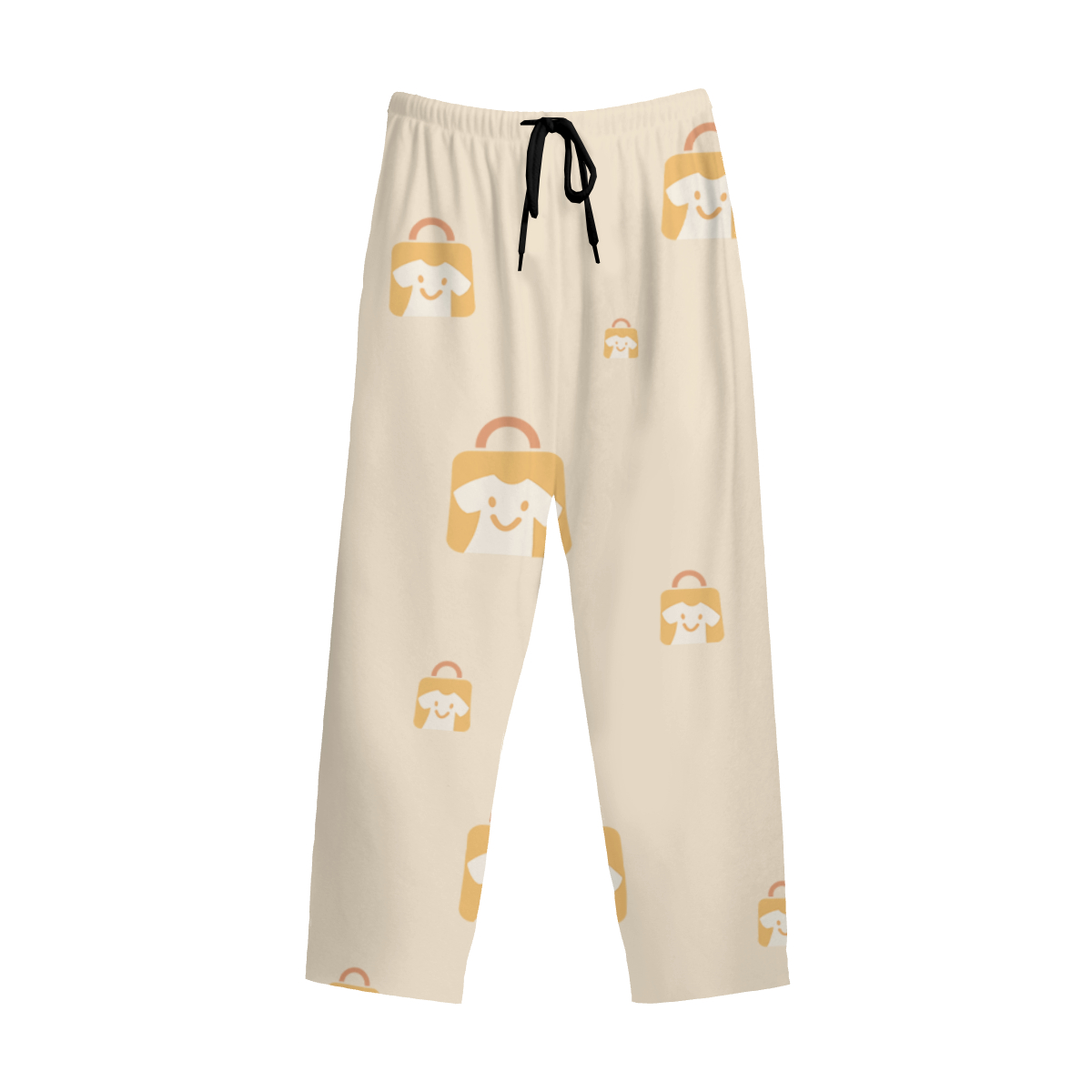
The word loungewear covers several different constructions, and each one is a different specification with a different print method attached to it. Before choosing a design, it is worth knowing which substrate the design will be printed on, because the substrate decides whether an all-over pattern is even possible.
- Cotton-like polyester. A synthetic knit engineered to feel closer to cotton than a standard polyester does. It accepts sublimation dye, which means full-panel all-over prints with no film on the surface, and it holds its shape through washing. It is the workhorse of printed loungewear.
- Flannel. A brushed fabric with a raised surface, common for pajama pants and seasonal sets. The brush lifts fibre ends, which creates the soft hand the category is bought for and adds a surface that must be considered when decoration is applied.
- Poly-cotton blends. The middle ground for cut-and-sew pieces, offering the breathability of cotton with more dimensional stability from the polyester share. Suitable for film-based decoration and for direct-to-garment where the cotton share is high enough.
- Air-layer and other technical knits. Two surfaces separated by a spacer structure, used for warmer sets and for pieces that need more body. The construction adds loft, which raises both the hand and the packed volume.
Two consequences follow. A sublimation-friendly synthetic substrate is what makes a full-panel pattern possible, so designers who want the pattern to run across seams should build for that substrate first and treat the natural-fibre options as a separate range. And heavier, brushed constructions change the shipping calculation rather than the print calculation, which is a cost question rather than a decoration question — covered in the section on unit cost and weight below.
Print Methods That Hold on This Material
Decoration on loungewear splits into two families: processes that dye the fabric, and processes that add a layer to it. The first family suits the category’s pattern-led designs; the second suits logos, text and small placements. The table below sets out how each method behaves on the substrates above.
| Method | Best substrate | Strength on loungewear | Limit |
|---|---|---|---|
| Thermal sublimation | Polyester and cotton-like polyester | All-over, edge-to-edge patterns with no added hand or film | Needs a high synthetic share; cotton cannot take the dye |
| Direct-to-film (DTF) | Poly-cotton, flannel, polyester | Strong colour on brushed and textured surfaces; good for text and logos | Adds a film with its own feel, which is noticeable on large placements |
| Direct-to-garment (DTG) | High-cotton blends | Soft hand on cut-and-sew pieces with a cotton surface | Needs pre-treatment and works against brushed surfaces |
| Thermal transfer | Most knits | Reliable for small multi-colour designs | Limited coverage; larger areas stiffen the fabric |
| Laser engraving and cutting | Rigid materials and accessories | Permanent branded details on tags or accessories that ship with the set | Not applicable to the garment itself |
The practical rule is to match the process to the pattern rather than to the product. A full-panel pattern belongs on a sublimation substrate; a small chest logo belongs on a film or transfer; a soft single-placement graphic belongs on cotton with DTG. Mixing a full-panel pattern with a film-based process creates a garment whose printed area and unprinted area behave differently in the wash, which is the most common structural complaint in this category.
Sizing, Fit and Blank Selection
Fit is the commercial centre of this category because the buyer is often choosing on behalf of someone else. A men’s loungewear set that runs small generates a return of two garments, at a shipping cost that is higher than a t-shirt return. Three practices reduce that exposure.
- Publish measurements, not just letter sizes. Chest, waist, inseam and total length in both centimetres and inches let a buyer measure a garment they already own and match it, which converts better than a size chart that only names S to 3XL.
- Order samples in two sizes rather than one, at the top and bottom of the range you intend to sell. The fit relationship is rarely linear across the size ladder, so a medium tells you little about a 2XL.
- Decide deliberately between regular and relaxed fit, and say which one the product is. Loungewear is bought for comfort, so a relaxed cut is usually right — but only if the listing says so, because a buyer who expects a relaxed fit and receives a regular one reads the difference as a sizing error.
Blank selection also affects the neckline, the waistband and the seam construction, all of which are visible quality signals on a garment that is worn without a jacket over it. Waistband type, drawstring presence and cuff finish are worth confirming on the sample, because those three details generate more complaints in this category than the print does. PrintDoors runs a sample service and states that the platform carries no minimum order quantity and no setup fee, so a seller can check all three at single-unit volume before committing to a range.
Unit Cost and Shipping Weight
Two costs dominate the economics of loungewear: the garment itself, and what it costs to move a bulky parcel. The first is negotiable through specification; the second is partly a function of packaging discipline and partly a function of how carriers price bulky items.
Carriers bill either on actual weight or on dimensional weight, whichever is greater, and dimensional weight is calculated from the parcel’s volume divided by a divisor set by the carrier or the service level. A loungewear set that ships in an oversized mailer can therefore be charged for space it never fills. USPS sets out the weight and dimensional rules that apply to its own services in the Domestic Mail Manual, and the principle transfers to other carriers: reduce packed volume before renegotiating anything, because volume is the variable a seller controls.
- Garment specification. Fabric weight, construction and the number of pieces in the set; heavier knits and brushed surfaces cost more per unit.
- Decoration coverage. Full-panel patterns use substantially more ink or film than a chest logo, and the difference shows in unit cost.
- Packaging volume. A correctly sized mailer reduces dimensional weight; an oversized one adds cost without adding protection.
- Run structure. PrintDoors states that its platform carries no minimum order quantity and applies bulk-order discount tiers, so consolidating a catalogue onto fewer substrates is what moves unit cost over time.
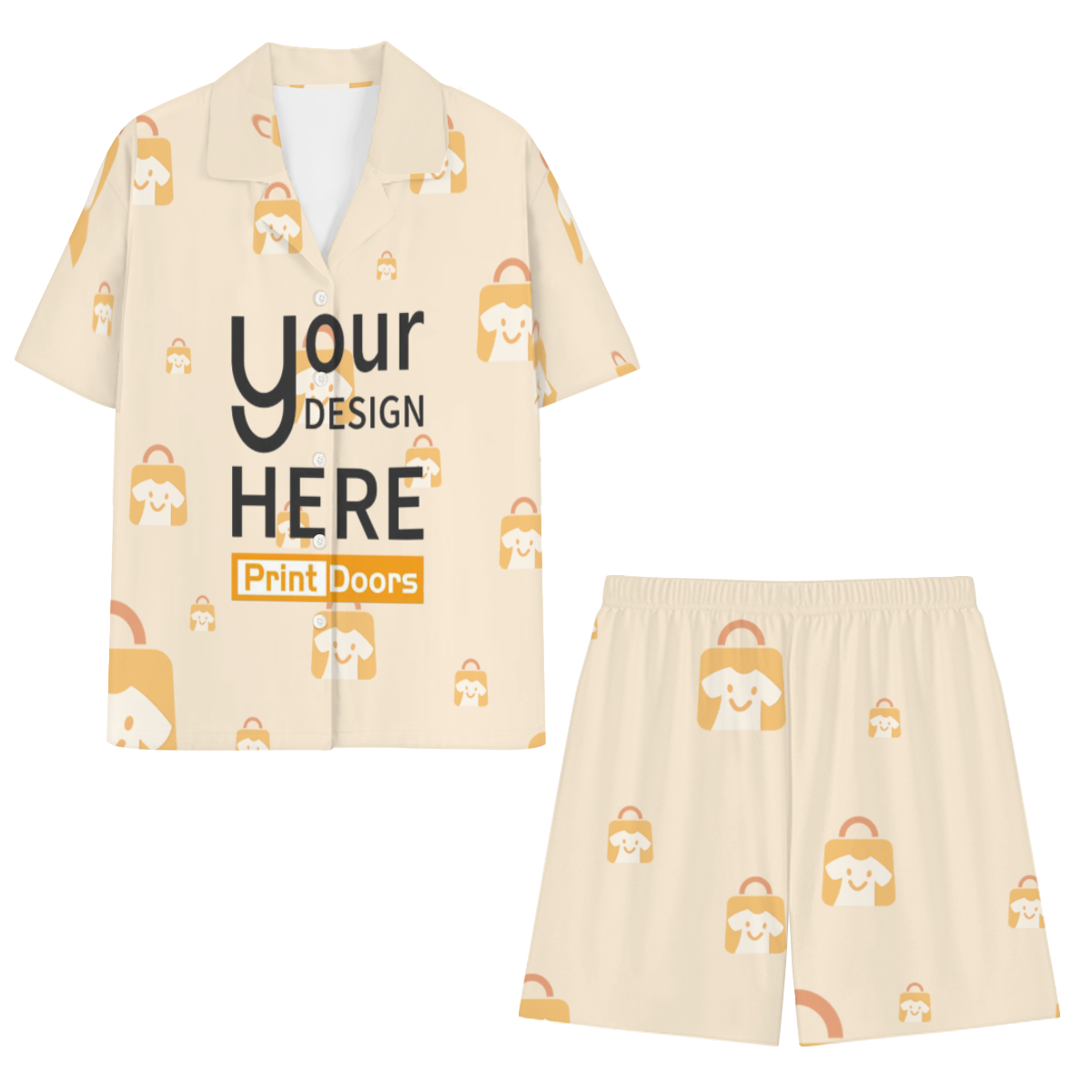
The set structure itself is a lever worth testing. Selling a top and a pant as separate products reduces the cost of a size mismatch and lets a customer buy only the piece they want, while selling the set reduces fulfilment complexity and ships in one parcel. Which one wins depends on the return rate you measure, not on the price list.
Quality Failures and How to Prevent Them
The failures that damage a loungewear listing are predictable, and each one has a specification answer rather than a customer-service answer.
| Failure | Cause | Prevention |
|---|---|---|
| Pattern breaks across seams | Panel-based production prints each cut piece separately, so alignment depends on the production file | Design patterns that tolerate a seam break, or confirm how the pattern is applied across panels before publishing |
| Colour looks different from the mockup | Mockups are rendered, and screen colour varies; sublimated dye also reads differently on a textured surface | Photograph a physical sample for the primary image and keep mockups for pattern variants |
| Shrinkage or distortion after washing | Cotton-rich pieces relax, and brushed fabrics distort when washed hot | Publish a care instruction naming temperature and drying position |
| Pilling on the brushed surface | Short fibre ends work free under abrasion, especially where a bag strap or waistband rubs | Note the pilling characteristic honestly and specify a combed or higher-quality yarn where the budget allows |
One regulatory point deserves a place in the specification sheet. Adult garments sold in the United States are subject to the flammability standard for clothing textiles at 16 CFR Part 1610, and children’s sleepwear has its own standards under 16 CFR Part 1615 and Part 1616. Sellers who extend a loungewear range into children’s sleepwear are therefore selling into a different rule set, not a smaller version of the same one. Fibre content disclosure for the same market follows the rules at 16 CFR Part 303, so the fibre percentages on the listing and on the garment need to agree.
Mockups, Photography and Listing Quality
Loungewear is sold through pattern recognition rather than through fit photography. The primary image should show the garment on a body or a flat lay where the pattern reads at thumbnail size, because a customer scrolling a category page is choosing between patterns. A rendered mockup is acceptable for variants, but at least one physical photograph per substrate should anchor the listing, since texture is the second decision the buyer makes.
Four listing elements carry more weight in this category than in a t-shirt listing.
- A measurement table in two units. Centimetres and inches, with the same four measurements for each size.
- The fibre content with percentages. A buyer comparing two loungewear listings is usually comparing how each one will feel, and fibre names answer that.
- The care instruction. Temperature, cycle and drying position, stated plainly.
- The set contents. Whether the price covers one piece or two, stated before the checkout rather than in the description’s fifth paragraph.
Photography that earns its cost shows the pattern at two scales: a full-length shot that shows how the pattern sits on the garment, and a close-up that shows the surface. Both can be produced from a single physical sample, which is the argument for ordering one even when the mockup generator produces an acceptable image.
Launching a Range: Sequence and Sample Plan
A launch sequence that avoids the expensive mistakes in this category follows the same order every time, and it starts with the substrate rather than the artwork.
- Choose one substrate for the first range and confirm the decoration method that substrate supports. One substrate keeps photography, sizes and care instructions consistent.
- Order samples in two sizes, in the pattern you intend to sell, and check the seam behaviour, waistband, cuff, colour against screen, and how the fabric feels after one wash.
- Write the listing before the artwork is finished. Measurement tables, fibre content, care instruction and set contents are specification work, and doing it first prevents a design that cannot be described accurately.
- Launch a narrow set of patterns on one product, measure the return rate against the size sold, and only then widen the size ladder or add a second substrate.
- Consolidate before you diversify. Volume accumulates on a specification, and PrintDoors applies bulk-order discount tiers to it, so a narrower catalogue with deeper demand prices better than a wide one with thin demand.
The cross-category references worth reading alongside this one are the men’s fabric and print method comparison, the pajamas and loungewear options page, and the men’s pajamas positioning page. Where a wholesale account or a marketplace asks for evidence rather than a supplier’s statement, an independent laboratory such as Intertek can test dimensional change, colour fastness and fibre content, and textile certification marks such as OEKO-TEX Standard 100 are verified through the certifying body rather than taken from a product page. General consumer-protection obligations for the market you sell into are summarised in the FTC’s business guidance.
FAQ
Can you print on demand on men’s loungewear?
Yes. Loungewear suits print on demand because the category is pattern-led, the print area is large, and nothing needs to be held in stock. The main constraints are shipping weight, because sets are bulky, and fit, because a size failure in a set costs two garments rather than one.
What is men’s loungewear usually made of?
Commonly a cotton-like polyester that accepts sublimation dye, or a poly-cotton blend, with flannel and brushed constructions used for seasonal pajama pants and sets. The fibre choice decides whether an all-over pattern is possible, because only a synthetic substrate takes a full-panel dye print.
Is loungewear profitable to sell print on demand?
Unit cost is higher than a t-shirt because there is more fabric and more decoration coverage, and shipping costs more because the parcel is bulkier. The offset is that sets and patterns carry a higher price point and are frequently bought as gifts, so the margin is workable where the fit guidance and the primary image are strong.
Should I sell loungewear as a set or as separate pieces?
A set ships in one parcel and simplifies fulfilment, while separate pieces reduce the cost of a size mismatch and let customers buy only what they need. Test one structure, measure returns by size, and change only when the return data supports it.
Check the substrate before you draw the pattern
Open a free PrintDoors account to review the loungewear substrates, decoration technologies and sample service, then build the range around one specification rather than several. Start at the production workflow, browse the print-on-demand catalogue, or look at the adjacent home and living range for sets that ship alongside apparel.