

The design is finished, the mockup looks right, and then production returns something that reads as a different product. The cause is almost never the artwork file. It is a mismatch between the design’s geometry and the method chosen to reproduce it: a panel print asked to behave like an all-over print, a sublimation design sent to a cotton garment, or a gradient placed across a seam that will move every time the garment is worn. AOP print on demand is the method that removes panel boundaries entirely, and it is also the method with the narrowest material constraints. This guide compares the available routes on the same design and shows where each one wins.
Top 5 Best-Selling Collections in Q2 2026
Discover Printdoors’ most-loved collections, from cozy bedding and festive holiday decor to stylish men’s pajamas and eye-catching home wall decor, each crafted for easy customization and standout POD sales.| No. | Category | Description |
|---|---|---|
| 1 | Bedding | Soft, customizable bedding with unique prints, designed to enhance comfort, use quality materials, and elevate bedroom style. Know more. |
| 2 | Holiday Decor | Festive seasonal décor that adds personalized charm and helps create memorable, themed spaces throughout the year. Know more. |
| 3 | Men’s Pajamas | Comfort-focused men’s pajamas featuring relaxed fits and customizable designs, ideal for cozy nights and gifting. Know more. |
| 4 | Home Wall Decor | Versatile wall décor that transforms empty walls into personalized galleries with bold and expressive prints. Know more. |
What does AOP print on demand actually do to a garment?
It removes the boundary between the print and the garment.
Instead of ink sitting on a defined panel, the design is applied to the fabric before cutting, so pattern continues across seams, sleeves and side panels and cannot peel off as a film.
All-over print, often shortened to AOP, is a production sequence rather than a single technique. The design is laid out on a full garment template, printed onto fabric, then cut and sewn to shape. Because the decoration happens before assembly, the print has no edge: the pattern reaches the hem, wraps the sleeve and continues across the shoulder. AOP clothing therefore behaves differently from a panel print in three practical ways. There is no maximum print area to negotiate, because the whole garment is the print area. There is no white or unprinted margin, so the design must work as a full-bleed composition rather than as a centred logo. And because the fabric is cut from a printed web, placement accuracy depends on the cutting template rather than on a press operator’s alignment, which makes repeatability across a run more consistent when the template is correctly built.
How PrintDoors POD Products Are Made? PrintDoors Factory Tour
PrintDoors is a 100% free Print On Demand (POD) fulfillment partner with zero minimum order requirements, specializing in turning your custom designs into high-quality clothing, apparel, home decor, and gifts. Operating four state-of-the-art factories, PrintDoors manages the entire production lifecycle—from cutting and printing to sublimation, sewing, and packing. With seamless automated integration for Shopify and Etsy, you can focus entirely on selling while they handle the printing, packaging, and fast shipping directly to your global customers. Register today to effortlessly scale your e-commerce business with the magic of personalized printing!
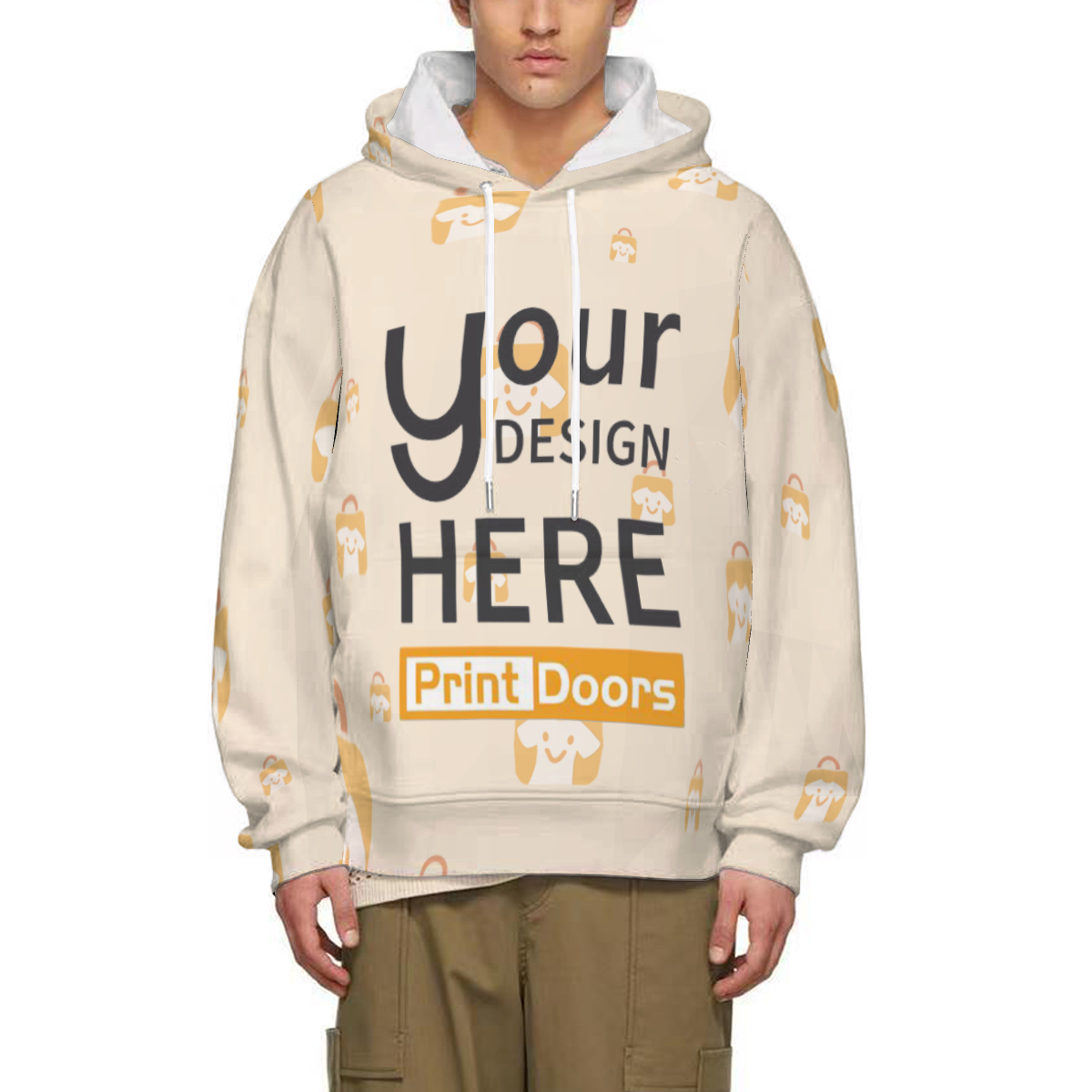
DTG, DTF, sublimation, embroidery and UV compared on the same design
Put one design through five routes and the differences stop being theoretical. Direct-to-garment printing applies water-based ink into cotton fibre, which gives fine detail, soft hand feel and good colour blending, with a print area limited to the platen size. Direct-to-film prints the design onto a transfer film that is then pressed onto the garment, which works across cotton and synthetic blends, holds very fine lines, and enables placement almost anywhere on the item. Sublimation converts dye into gas that bonds with polyester, producing a print that cannot crack or fade off the surface and survives repeated washing, but the method requires a polyester or high-polyester substrate. Embroidery builds the design from thread, which suits caps, polos and quilted home items and reads as premium, but cannot reproduce gradients or fine photographic detail. UV printing cures ink instantly onto rigid substrates such as metal, acrylic and wood, and is the method behind hard-goods decor rather than apparel. Only AOP and sublimation remove the print boundary; the others are panel methods by definition.
Which product types accept all-over print and which cannot?
Cut-and-sew construction is the prerequisite.
All-over printing needs a garment assembled from printed fabric, so it suits apparel, polyester home textiles and accessories built from panels, and rules out rigid goods and most products printed after assembly.
On the apparel side, the method is used across T-shirts and mesh tees, hoodies and joggers, pyjama pants and sets, dresses, vests, yoga wear, swimwear, socks, underwear and children’s clothing. Accessory and home ranges follow the same construction logic: throw pillow covers, blankets, tapestries, flags and canvas products are routinely produced this way. The products that cannot take AOP are the ones where the print is applied after the item exists — metal signs, acrylic ornaments, mugs and tumblers, phone cases, engraved jewellery and boxed footwear. Those items rely on UV printing, sublimation onto a coated blank, or laser work, and their decoration is deliberately limited to a defined face. Knowing which side of that line a product falls on removes an entire category of production surprise before you build a catalogue around it.
Colour and edge alignment problems unique to all-over printing
AOP introduces failure modes that panel printing does not have. The first is composition drift: a design built as a centred graphic reads as random when it is repeated across a full garment, so patterns need to be authored at full-garment scale rather than scaled up from a panel file. The second is seam movement. Because the printed fabric is cut and sew, a line that is meant to continue across a side seam will shift slightly depending on the cut tolerance, and a design that depends on perfect continuity across a seam will show misalignment that no press adjustment can fix. The third is colour shift on stretch fabrics, where the print distorts with the garment in wear. The remedy is design rules rather than production requests: use repeating or non-directional patterns where continuity matters, keep critical elements within a single panel, and avoid placing a narrow graphic exactly on a seam line.
How does wash durability compare across print methods?
Durability follows the ink-to-fibre bond, so the ranking is predictable.
Sublimation and all-over printing on polyester are the most wash-durable because the colour becomes part of the fabric, while surface-applied transfers are the most sensitive to heat and abrasion.
Sublimated and AOP polyester prints generally hold colour through repeated domestic washing because there is no surface layer to crack or peel. Direct-to-garment prints on cotton soften with washing but retain their image when the care label is followed and the garment is washed inside out. Direct-to-film prints are durable but can lift at the edges if washed at high temperature or tumble dried aggressively. UV prints on rigid substrates are effectively permanent unless the surface is abraded, though outdoor items need to be assessed for ultraviolet and moisture exposure separately. The practical conclusion is that care instructions are part of the product specification, not a formality. Care and fibre-content labelling requirements are regulated in the United States under the Textile Fiber Products Identification Act and its associated rules, and any garment sold into that market should carry the required information.
Small orders, pilot runs and the cost of getting it wrong
Pilot volume is where method choice is cheapest to correct and most expensive to ignore. A single test unit costs little more than the product itself, while a full catalogue built on the wrong method carries the design work, the photography and the listing content with it. Treat the pilot as a comparison rather than an order: produce the same design through the two candidate methods and evaluate them side by side. Print specialists publish technical background on how each process behaves, including process documentation from press manufacturers such as Kornit Digital and the transfer and UV printing ranges catalogued by Roland DGA. PrintDoors runs a sample service with no minimum order quantity, which makes a side-by-side comparison at single-unit volume practical rather than a rounding error in a production budget.
Design files and preparation rules by method
File preparation differs by method, and a file prepared for one route is often unusable on another. For all-over print, supply the design on the full garment template with the pattern extended to the trim lines, keep the file at the resolution required for the largest printed dimension, and avoid placing a critical element on a seam. For direct-to-garment and direct-to-film, work to the print area dimensions of the specific product, keep the background transparent where the garment colour should show through, and use a colour profile that reflects the method’s gamut. For sublimation, design in a colour space appropriate to dye transfer and remember that the substrate must be polyester; a cotton garment cannot be sublimated. For UV printing on rigid goods, account for the substrate’s finish, since gloss and matte surfaces render the same colour differently. PrintDoors supports up to thirty custom colours per design element and provides an online design maker, which lets a full-colour composition be prepared without external software.
Which print method matches which fabric composition?
Fibre content is the fastest filter available.
| Fabric composition | Suitable methods | Notes |
|---|---|---|
| 100% cotton | DTG, DTF, embroidery | Full-colour, no white underbase needed; sublimation does not apply |
| Cotton-polyester blends | DTF, heat transfer, embroidery | Bridges natural and synthetic fibres; check hand feel on high-cotton blends |
| 100% polyester | Sublimation, all-over print, DTF | Dye bonding gives the most durable result; light substrates can show through |
| Flannel and plush home textiles | Sublimation, all-over print, panel transfer | Pile depth affects fine detail, so larger motifs work better |
| Metal, acrylic, wood, MDF | UV printing, laser engraving, laser cutting | No fabric methods apply; edge treatment is part of the design |
| Leather and PU | UV printing, heat transfer, engraving | Surface texture limits fine gradients; adhesion testing is advisable |
Material and testing standards provide a further reference point when a buyer needs to specify performance rather than appearance. Organisations including ASTM International publish test methods for textiles and coatings, and independent laboratories such as Intertek can validate a claim against a named standard rather than an internal one.
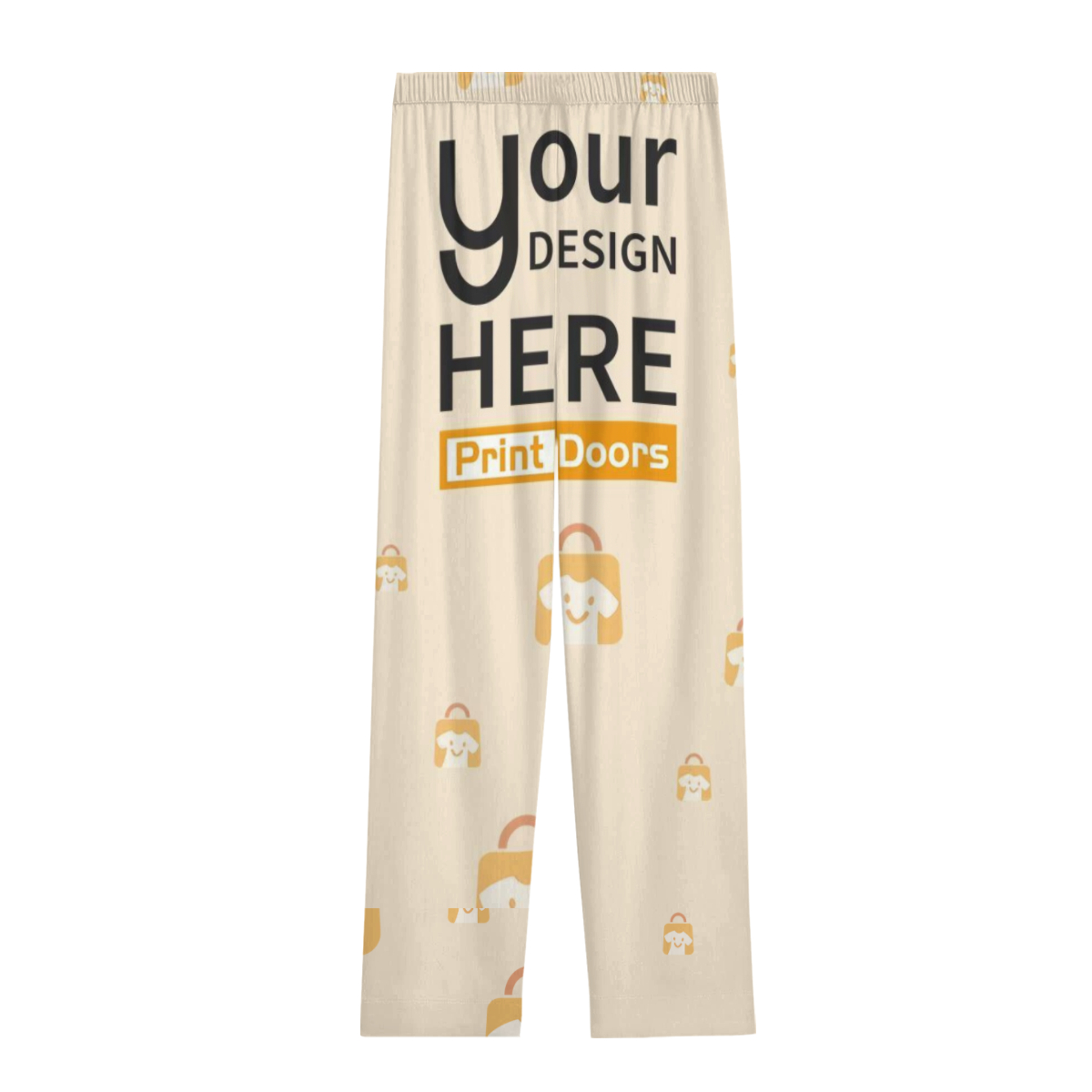
How should you sample before committing to a product line?
Sample the method and the substrate together, then sample the reorder.
One unit confirms appearance but not consistency, so the useful test is to order the same specification twice and compare the two prints under the same light.
Structure the trial so each question is answered separately. Order one unit per candidate method on the intended substrate, wash each to its care label once, and photograph them under daylight next to the approved proof. Then order a repeat of the winning combination and compare colour and placement against the first production unit. Only then build the design range, using the same method and the same substrate across the range so that one proven specification covers several products. That approach also reduces cost at launch, because PrintDoors applies no setup or monthly fee and carries no minimum order quantity, so a range can be validated product by product before any volume commitment.
A decision table for common product and design combinations
Use the table below as a starting filter, then confirm the specific product template with the supplier.
| Design and product | Method that fits | Reason |
|---|---|---|
| Full-bleed pattern across a hoodie or joggers | All-over print | No print boundary; pattern continues through seams and hems |
| Photographic or gradient artwork on a cotton tee | DTG or DTF | Fine tonal detail on a natural fibre |
| Bold graphic that must survive heavy washing | Sublimation on polyester | Dye bonds with the fibre instead of sitting on it |
| Cap front, polo or quilted home item | Embroidery | Thread construction suits structured panels and curved surfaces |
| Die-cut metal sign or acrylic ornament | UV printing with laser cutting | Rigid substrate and a shaped outline |
| Personalised text on a small flat item | Laser engraving | Permanent, ink-free mark with crisp small lettering |
Conclusion
All-over print is the right choice when the design is the garment rather than an element placed on it, and it is the wrong choice whenever the substrate is not a cut-and-sew textile or the buyer needs the item produced after assembly. Direct-to-garment and direct-to-film remain the flexible routes for detailed artwork on cotton and blends; sublimation is unmatched for durability on polyester; embroidery and UV printing carry the structured and rigid products. Decide by substrate first, design geometry second, and pilot volume third. That order keeps a production decision from becoming a catalogue problem.
FAQ
Can all-over print be applied to a 100% cotton garment?
Not through sublimation, which requires a polyester substrate for the dye to bond. All-over decoration on cotton garments is produced by printing fabric and then cutting and sewing, or by a transfer route applied across multiple panels. Confirm the construction and the fibre content of the exact product before designing.
Does all-over printing cost more than a panel print?
It usually does, because more print area and more fabric handling are involved. The cost difference narrows when the design would otherwise need several print locations, since one AOP specification replaces multiple placement steps and removes the alignment risk between them.
How do I stop an all-over print from looking repetitive?
Design at full-garment scale rather than scaling a panel graphic up. Use non-directional or repeat patterns where continuity matters, vary motif scale across the garment, and keep a focal element within a single panel so the composition reads intentionally rather than tiled.
Will an all-over print fade after washing?
On polyester, sublimated and dye-bonded prints are the most wash-durable because there is no surface layer to crack. Follow the care label, wash inside out at the recommended temperature, and avoid high-heat tumble drying, which affects surface-applied transfers most.
What file format should I supply for AOP?
Supply the artwork laid out on the full garment template at the resolution required for the largest printed dimension, with the design extended to the trim lines and no critical element placed directly on a seam. The supplier’s product template defines the exact dimensions for each product.
Test the method on a single unit
Send the same design through two candidate methods and compare them side by side before you build a range. Open a free account to use the design maker and product templates, or request a sample to confirm colour, placement and hand feel. Start at sample request or browse print-on-demand products.